

GBR Friday | Layoffs Hit LIV as It Hunts $300M, an Australian Start-Up Rethinks the Visitor Booking, and the Full Swing Deal, One Level Deeper
Team equity and tax losses on the table at LIV, Currents Golf behind Tasmania's newest destination, and Versant's vertical play in off-course golf — plus the rest of the week across the industry

HOUSEKEEPING BEFORE WE START: Golf Business Review is made possible by the support of its readers and by carefully selected partnerships that sustain our independent editorial work. If you would like to support independent, long-term coverage of the global golf industry — and access the full GBR archive — subscribe here.
HOW TO PARTNER WITH US: If you are interested in contributing to and strengthening our content offering as a partner, company, or institution, we would be pleased to hear from you at newsroom@golfbusinessreview.com.
Good morning GBR community,
The Saudi PIF is walking away from LIV Golf at the end of this season, after $6 billion since 2022 — and the league is now hunting for $300 million while bracing employees for layoffs, deciding what exactly is for sale: team equity, billions in tax losses, or a smaller league altogether. That is the week’s biggest open question.
We also return to Versant’s $530 million Full Swing deal, because three days on the sharper story is clear: a television company just bought the place indoor golf is played.
Plus: 7 Mile Beach hands its entire visitor operation to Currents, the governing bodies pause the ball rollback, Tiger adds a third design in Cabo, and a family-run English resort outranks Turnberry.
THE LEAD
THE VISITOR TEE SHEET, SOLVED: HOW CURRENTS RUNS THE FRONT DOOR AT 7 MILE BEACH
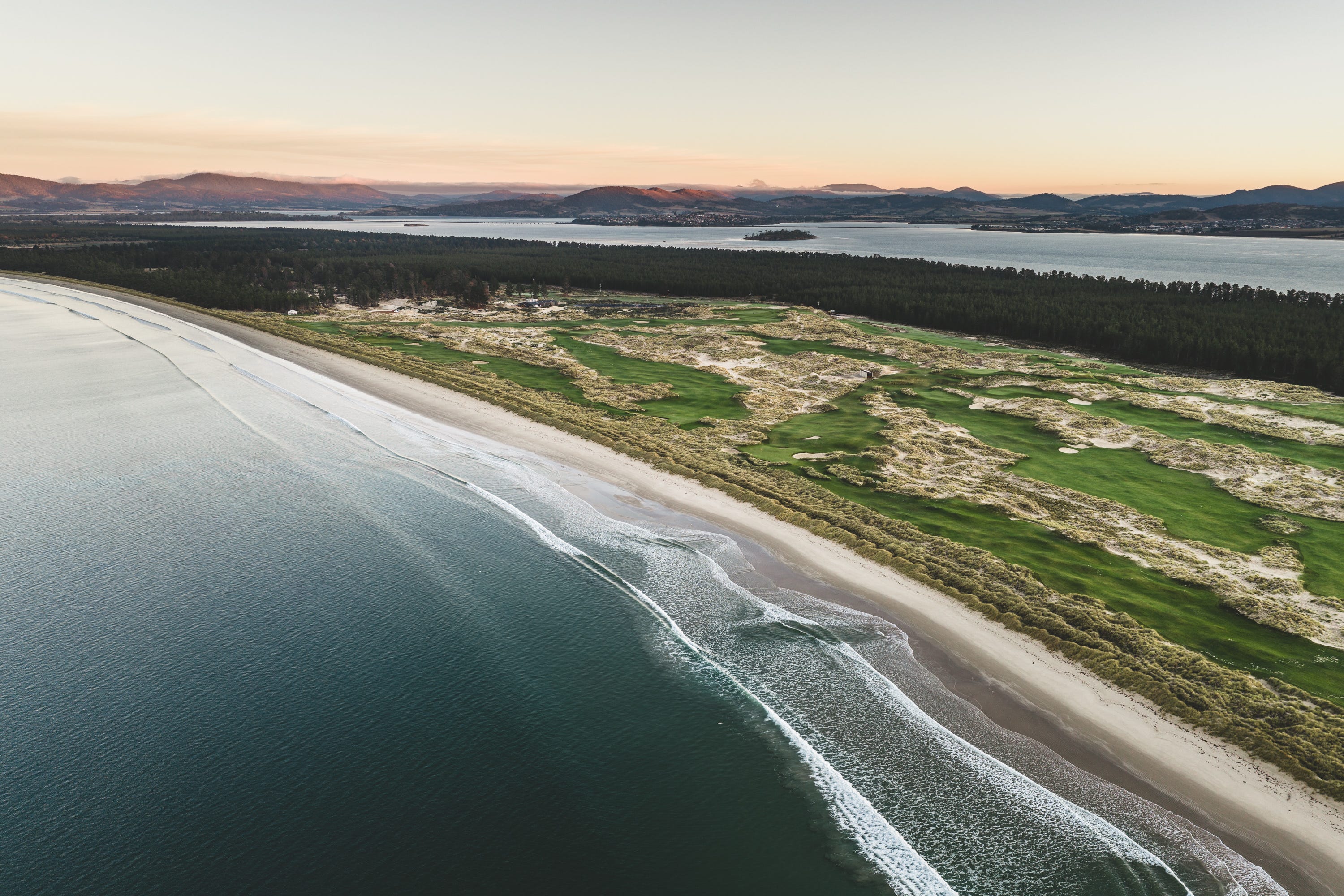
One of the most talked-about new courses in the world spent fifteen years getting built. It handed its visitor operation to a company far younger than that.
7 Mile Beach opened in Hobart, Tasmania, in December 2025, founded by Mat Goggin and designed by Clayton, DeVries & Pont. It is public, aiming for the top tier of global destinations, with a second eighteen and a membership programme on the way. It also lands in the middle of Tasmania’s rise as a golf destination, alongside Barnbougle, Cape Wickham and Ocean Dunes, a cluster now pulling international players a long way south. In June 2026 the club chose Currents Golf to run its visitor tee sheet from end to end: eligibility, tee-time requests, and payment in one place, without the visitor leaving the club’s own environment.
The reason is familiar to any operator handling visitor and reciprocal demand. At most leading clubs, a visitor booking still means a letter of introduction, a handicap certificate, and a run of emails before a time is held and payment taken. Every booking costs staff hours, and no one has a single view of who is coming in. Platforms built for public volume were never designed to carry it, because on a municipal course the visitor and the member are the same person.
Currents Passport, the company’s visitor module, was built for the opposite end of the market, starting with a request from The Royal Melbourne Golf Club. It keeps the etiquette and bespoke rules that define a private club, does the administrative work underneath, and by the company’s account has saved clubs hundreds of staff hours. Reciprocal play between clubs, a high-value slice of demand most systems ignore, runs inside the same software.
“The booking process is the first point of contact with many players,” says Will Kay, General Manager of 7 Mile Beach. “We wanted an online experience that matched the natural experience we provide on site, and Currents made sure this was the case.”
What should hold an operator’s attention is the decision. A brand-new, globally ambitious course, with no legacy process and demand arriving from overseas, concluded that the booking is the first thing a visitor touches, and that keeping it inside the club’s own environment is worth paying for. Currents now works with many of the leading clubs across Australia and New Zealand, and will shortly expand into the U.K. and Europe. For operators still running visitor bookings out of an inbox, it is a fair question how long that holds.
M&A & EARNINGS
The simulator just became a media asset. Below, the deal that proves it — and venture money finding golf’s edges, from premium footwear to turf enzymes.
FULL SWING, ONE LEVEL DEEPER — WHY A BROADCASTER WANTS TO OWN THE HARDWARE
Tuesday’s edition carried the news: Versant, the publicly traded Comcast spin-off, is buying Full Swing from George Pyne’s Bruin Capital for $530 million in cash — its third acquisition this year, after Free TV Networks and StockStory. What deserves a second look is the price, and the logic behind it. Bruin paid $160 million for the business in 2021, so it exits at 3.3x in five years; Tiger Woods, an investor since 2015 with a reported voice in product decisions, holds between 1% and 2% — a stake worth up to roughly $10.6 million at the new valuation — and the deal should close in the second half of the year. The headline was the number. The story is what a television company thinks it is buying.
Versant already reaches the golfer three ways. Golf Channel carries the broadcast, GolfNow sells the tee time — CEO Mark Lazarus calls it “an OpenTable for tee times,” Sportico notes, with 40 million bookings last year — and GolfPass, the McIlroy-backed subscription platform, collects the recurring revenue. Full Swing adds the machine: the PGA Tour’s official licensed simulator, already woven into Golf Channel programming since 2019, with studio kits retailing between $11,500 and $15,000, a $5,000 launch monitor, and an endorsement roster running from Jordan Spieth and Xander Schauffele to Patrick Mahomes and Steph Curry. The Carlsbad company has changed hands repeatedly since its founding in 1986, and every owner has sold it for more. Watch, book, subscribe — and now play — inside one company.
The sharper angle is TGL. Full Swing’s technology powers the Woods–McIlroy indoor league, played on a 53-foot screen at the 1,500-seat SoFi Center, which completed its second season in March and is now negotiating its next media deal after the expiry of ESPN’s initial two-year contract. Golf Channel has been floated as a potential bidder for TGL, or for WTGL, the women’s league launching later this year. If Versant bids, it would sit on both sides of the table: the network buying the rights, and the owner of the platform the league is played on.
The lesson for operators sits in Bruin’s exit, not Versant’s entry. Off-course golf is no longer marketing for the on-course business; it is an asset class with its own multiples, and it just printed 3.3x in five years. Your customer is a golfer fifty-two weeks a year. How many of those weeks does your business actually see him? CNBC places the deal inside the Lazarus acquisition playbook, and Hollywood Reporter explains why golf is Versant’s “model home” — the one vertical already earning half its revenue outside pay TV.
ALMA MATER HAS CLOSED A FUNDING ROUND BACKED BY THE ATHLETES WHO WEAR ITS SHOES. WWD, which broke the story, reports the premium golf-footwear start-up’s new investors include current and former professionals — more capital flowing into golf’s high-end lifestyle category.
ZYMECO HAS CLOSED A $4 MILLION SERIES A FOR ITS ENZYME-BASED TURF SOLUTIONS. The maker of ThatchZyme announced the raise — venture money still finding its way into course-supply and agronomy technology.
TOURS & POWER
Everyone is repricing at once: LIV against life without the PIF, the Tour against its own 2028 reset, the governing bodies against the equipment market.
LIV GOLF SHOPS FOR $300M — WHAT IS ACTUALLY FOR SALE WHEN THE PIF WALKS
The Saudi PIF is pulling LIV’s funding at the end of this season, after total spending projected to pass $6 billion since 2022, and the league is hunting for $300 million in new capital — one large check or several smaller ones. This week added a harder data point: Sports Business Journal reported that LIV has told employees to expect potential layoffs as part of a right-sizing effort — and it lands alongside Jon Rahm’s admission, covered in Tuesday’s edition, that he would not rule out investing in the league himself once he sees a business plan. The question has moved on from whether LIV survives. It is what, exactly, is being sold.
The pitch, laid out in detail by Front Office Sports, has three parts. Equity — in the league or in any of its 13 teams, which LIV executives were valuing at $1 billion apiece as recently as January; a league-level investor would take 60–70% of every team, and family offices have explored tickets of $25–50 million. Losses — net operating loss carry-forwards CEO Scott O’Neil describes as running into the billions across the U.S. and U.K., a tax asset for the right buyer. And a smaller league — LIV 2.0 would cut 2027 from fourteen events to ten, five of them team majors in markets where the league has traction, such as Australia and South Africa, with purses falling from $32.3 million per event to around $10 million. The adviser roster tells its own story: AlixPartners on finance, Ducera as investment banker, Gibson Dunn as counsel, and two new independent directors — Gene Davis and Jon Zinman — whose CVs run heavy on structured bankruptcies.
When sovereign money leaves, the price of a sports property is set by the next buyer, not the last one. Every contract written against the PIF’s balance sheet — venue deals, sponsorships, player money — reprices with it. If you have commercial exposure to LIV, your 2027 counterparty may have a different owner, ten events instead of fourteen, and a third of the purse. Would your deal still clear at that number?
TOURNAMENT ORGANIZERS ARE DOING THE MATH ON THE TOUR’S 2028 SPLIT. Golf Business Technology gathered first reactions from the events facing Challenger-tier status, where top players will not be allowed to enter: Valspar’s Tracy West concedes the second tier “will be challenging, at least in the beginning,” the John Deere Classic professes business as usual, and every host community and title sponsor is now recalculating what a designation without the stars is worth.
GOLF’S GOVERNING BODIES HAVE PAUSED THE BALL ROLLBACK UNTIL AT LEAST JANUARY 2030. The full joint statement from the USGA, R&A, PGA Tour and DP World Tour sets out the reasoning: industry feedback favored a single 2030 implementation, and the Tours doubt the updated testing standard would deliver, so the interim goes to testing alternatives that slow elite-level distance with less disruption to the wider equipment market. ESPN’s report captures the stakes: the updated standard was designed to trim roughly 15 yards off elite drives, and USGA CEO Mike Whan insists the 2030 ball stays on the table. For manufacturers, the pause buys roadmap time — and stretches out the uncertainty.
SEVEN ACTIVE LIV PLAYERS ARE PLAYING A PGA TOUR-SANCTIONED EVENT FOR THE FIRST TIME. Jon Rahm, Tyrrell Hatton, David Puig, Laurie Canter, Tom McKibbin, Adrian Meronk and Victor Perez entered the $9 million Genesis Scottish Open after paying outstanding fines to keep their DP World Tour memberships — the co-sanctioning arrangement that opened the door dates back to 2022. A LIV winner would take $1.62 million plus exemptions into The Open and the 2027 Masters, but no Tour card; the détente is advancing through commerce faster than through institutions.
COURSES & REAL ESTATE
Capex keeps flowing into dirt: a Washington acquisition, a third Tiger design in Cabo, a Vermont rebuild, and an English independent outranking Turnberry.
ESCALANTE GOLF HAS ACQUIRED TUMBLE CREEK, A TWO-COURSE PROPERTY IN WASHINGTON STATE. The purchase, reported by Golf Course Industry, adds 36 holes to the multi-site operator’s portfolio — course-ownership consolidation keeps rolling.
TIGER WOODS WILL DESIGN A THIRD COURSE AT DIAMANTE CABO SAN LUCAS. The first details of the private Legacy Course place it alongside his El Cardonal and Oasis Short Course at the resort — design-as-business and Los Cabos premium real estate continuing to feed each other.
STOWE COUNTRY CLUB HAS UNVEILED ITS FULL 18-HOLE REDESIGN BY BEAU WELLING. Golfdom’s course-of-the-week feature walks through the multi-year rebuild — new greens and tees, Better Billy Bunkers, full regrassing, new irrigation and drainage — that anchors owner Mt. Mansfield Company’s push to position Stowe, together with The Mountain Course at Spruce Peak, as a 36-hole New England destination. More than 200 new members have joined across the two clubs since the transformation was announced.
TEWKESBURY PARK HAS CRACKED GOLF WORLD’S NEW TOP 100 LUXE RESORTS EUROPE LIST. The family-run, 93-room Gloucestershire resort ranks ahead of La Manga, Celtic Manor and The Belfry — and ahead of Trump Turnberry for accommodation quality — on the back of £9.5 million invested across two waves since the McIntosh family took ownership in 2014. In a European golf-travel market now worth over $8 billion, roughly 30% of global golf tourism, it is a case study in independent, affordable luxury holding its own against the corporate mega-resorts.
TECH & AI
The theme is delegation: AI answering the pro shop phone, robots mowing the slopes, a GPT coaching the coaches.
ZEST GOLF AND COURSEREV.AI HAVE PAIRED TEE-TIME DISTRIBUTION WITH AN AI OPERATIONS LAYER. Zest’s single API pushes live inventory, rates and booking conditions to tour operators and OTAs across more than 20 tee-sheet integrations, while CourseRev.ai answers the phones, manages waitlists and books directly into the same tee sheet in multiple languages. The joint announcement sketches where this is heading: courses structured to be queryable by the AI agents that will increasingly plan and book golf trips on the golfer’s behalf, starting across EMEA.
KRESS HAS LAUNCHED EYEPILOT, A VISION-AI ROBOTIC MOWER LINE BUILT FOR 40-DEGREE SLOPES. Kress’s spec sheet makes the labor case: commercial-grade, RTK-guided machines that navigate without boundary wire, process ten images a second for centimeter-level accuracy even without signal, and claim double the mowing efficiency of traditional autonomous units — robotics aimed squarely at the maintenance budget’s biggest line.
PROPONENT GROUP HAS PUT A CUSTOM GPT IN FRONT OF ITS 500-PLUS MEMBER COACHES. Proponent says usage has climbed steadily since the mid-May beta launch of the tool, which sits front and center on the group’s member site and runs enterprise-only search across twenty years of the network’s proprietary teaching-business IP — applied AI arriving in the instruction-services business.
BLUE TEES GOLF IS WIRING AN AI LAYER THROUGH ITS ENTIRE DEVICE ECOSYSTEM. The brand’s platform announcement explains how GAME AI knits launch-monitor data from its Rainmaker together with GPS, scoring and shot tracking to feed personalized club recommendations and an AI caddie — platform lock-in logic applied to consumer golf tech. The GAME App is live on iOS and Android, and the full lineup gets its trade showcase at the PGA Buying Summit in Frisco, where Blue Tees is the event’s official rangefinder and speaker sponsor.
TOPTRACER WILL TURN THE 154TH OPEN INTO ITS BIGGEST SHOWROOM YET. Toptracer’s announcement details the Royal Birkdale footprint: exclusive tracing of the global broadcast, live shot data via QR codes on practice-round tees, and ten simulators at The R&A’s Swing Zone plus machines across the grounds. Behind the activation sits a business of 1,450 sites in 38 countries, by the company’s own count, with 45 million hours played in 2025 and a pitch to operators of at least 50% revenue growth in year one — a major as a B2B sales channel.
BRANDS & PLAYERS
Where the brands spent their week: endorsements, licensing and launches.
PING HAS SIGNED WYNDHAM CLARK TO AN EXCLUSIVE SCOTTSDALE TEC PUTTER DEAL. PING’s announcement leans on the numbers: the 2023 U.S. Open champion set the PGA Tour’s Strokes Gained: Putting record — more than 12.5 shots gained in a week — with the Ally Blue Onset model at the CJ Cup Byron Nelson. Terms were not disclosed; the validation for the eye-tracking-inspired alignment technology PING launched in April was the point.
PADRAIG HARRINGTON’S U.S. SENIOR OPEN DEFENSE EXTENDS ONE OF GOLF’S LONGEST EQUIPMENT MARRIAGES. The Irishman won by four at Scioto — his fourth senior major, playing the Wilson irons and wedges he has carried since 1998 — and Wilson’s celebration of the milestone lands a week before he returns to Royal Birkdale, site of his 2008 Open win.
SUNDAY GOLF HAS LICENSED THE BOB MARLEY ESTATE FOR A LIMITED-EDITION BAG LINEUP. Sunday Golf’s launch pairs three designs in the Marley family’s colors with lion logos and the singer’s signature, selling direct at $139 to $389 while supplies last, as the fastest-growing U.S. bag maker — previous collaborator with 7-Eleven and Whataburger — keeps chasing younger, lifestyle-driven buyers through cultural licensing.
UPSWING GOLF HAS LAUNCHED GALAXY, A JUNIOR CLUB LINE BUILT SPECIFICALLY FOR GIRLS. UpSwing’s launch materials detail the engineering: shafts half an inch shorter than the boys’ sets with re-tuned kick points, on the brand’s adjustable UpTech platform that lengthens as the player grows. Sets run £449 to £899 direct from the brand, chasing an underserved demographic and tomorrow’s participation numbers.
SUN MOUNTAIN HAS BROUGHT MILITARY-GRADE BALLISTIC NYLON TO ITS NEW MATCHPLAY STAND BAGS. Sun Mountain’s spec sheet covers the details — 1680D weave, polyurethane coating, matching rain hood, eight pockets — with the 4-way and 14-way bags selling direct at $425–435, aimed at the durability end of the accessories market.
IMPERIAL HAS BUILT ITS 2027 HEADWEAR COLLECTION AROUND A NEW PROPRIETARY FABRIC. Imperial’s collection preview leads with Lodestar — 100% recycled, natural-look, moisture-wicking, UPF 50+ — from the brand voted #1 headwear supplier to private and resort shops nine years running, whose customers include the U.S. Open, PGA Championship and Ryder Cup; the full catalog lives at imperial1916.com.
TAYLORMADE HAS PLANTED ITS FIRST KINGDOM FITTING FLAG OUTSIDE THE U.S. The opening announcement featured Tommy Fleetwood and Charley Hull at The Kingdom at The Grove in Hertfordshire: three bays with TrackMan 4, GC Quad Max, GEARS and Quintic, more than 1,800 shafts and an on-site build workshop across 8.5 acres of a Troon-managed five-star resort. Premium fitting as a retail strategy for the UK and Europe — fittings are already bookable through The Grove.
THE DEMAND SIDE
Where the golfer’s money goes: a 3,000-player amateur field, golf-travel dealmaking in Mexico, and a $30 door into the game.
THE MYRTLE BEACH WORLD AMATEUR HAS FILLED ALL 3,000 SPOTS. The organizers’ field breakdown: entrants from 49 states and 17 countries, 95% from beyond 50 miles, ages 20 to 93, playing 72 holes across the Grand Strand plus the nightly “World’s Largest 19th Hole” at the 120,000-square-foot convention center. Destination-amateur economics at full capacity — an alternate list is open at the tournament site.
IAGTO TOOK ITS NORTH AMERICA GOLF TOURISM CONVENTION TO MEXICO FOR THE FIRST TIME. IAGTO’s wrap-up from the Riviera Maya covers the 254 delegates from 32 countries who did two days of pre-scheduled golf-travel dealmaking — meetings over 90% booked — between World Cup matches, in a Mexican market that the association has tracked from $270 million in 2003 to $400 million a decade later.
COLIN MONTGOMERIE OPENED HARBOR SHORES’ NEW WEE COURSE WITH BACK-TO-BACK HOLES-IN-ONE. The resort’s opening-day report has the theatre; the economics underneath are the story: nine holes across five acres, $30 a round, kids under 12 free, leagues and junior programs already filling the tee sheet at the Michigan resort built on $900 million of golf-driven regeneration.
MOVERS
Scotti Corley joins Bobby Jones Links as Director of Business Development after 23 years at the NGCOA — an expansion signal from the 35-property boutique manager. Andrew Lamie returns to Turtleson as territory manager for Tennessee and Kentucky, deepening the apparel brand’s Southeast push. Ryan Dotters, Full Swing CEO, will join Versant when the deal closes, reporting to digital chief Will McIntosh, per Deadline.
WHAT WE ARE READING
Variety frames the Full Swing deal as a media-industry pattern: the New York Times has games, Disney has theme parks — and Versant has golf.
SportsPro looks at the deal from the seller’s side: George Pyne’s Bruin Capital banks its 3.3x fresh off raising a $1 billion sports fund and buying into Matchroom.
Stand Up For Southport carries The R&A’s economic research as Birkdale week arrives: the 153rd Open at Portrush generated £280 million in combined economic and media benefit — the number Southport’s businesses are now chasing.