

Securing a round at a leading private club has long carried a paper trail. A letter of introduction. A handicap certificate. A chain of emails and calls to confirm who is eligible and settle what they owe. Every one of those bookings pulled a staff member off other work, with no single screen showing who was due to arrive or what they had paid.
Premium clubs absorbed that cost because nothing built for them existed. Tee-time software was made for public and municipal volume, where filling slots quickly matters more than screening who plays. Private clubs and destination courses work from a different starting point. They need to know who is on the course, honour reciprocal agreements with other clubs, and hold the standards that define them.
7 Mile Beach ran into that reality on day one.
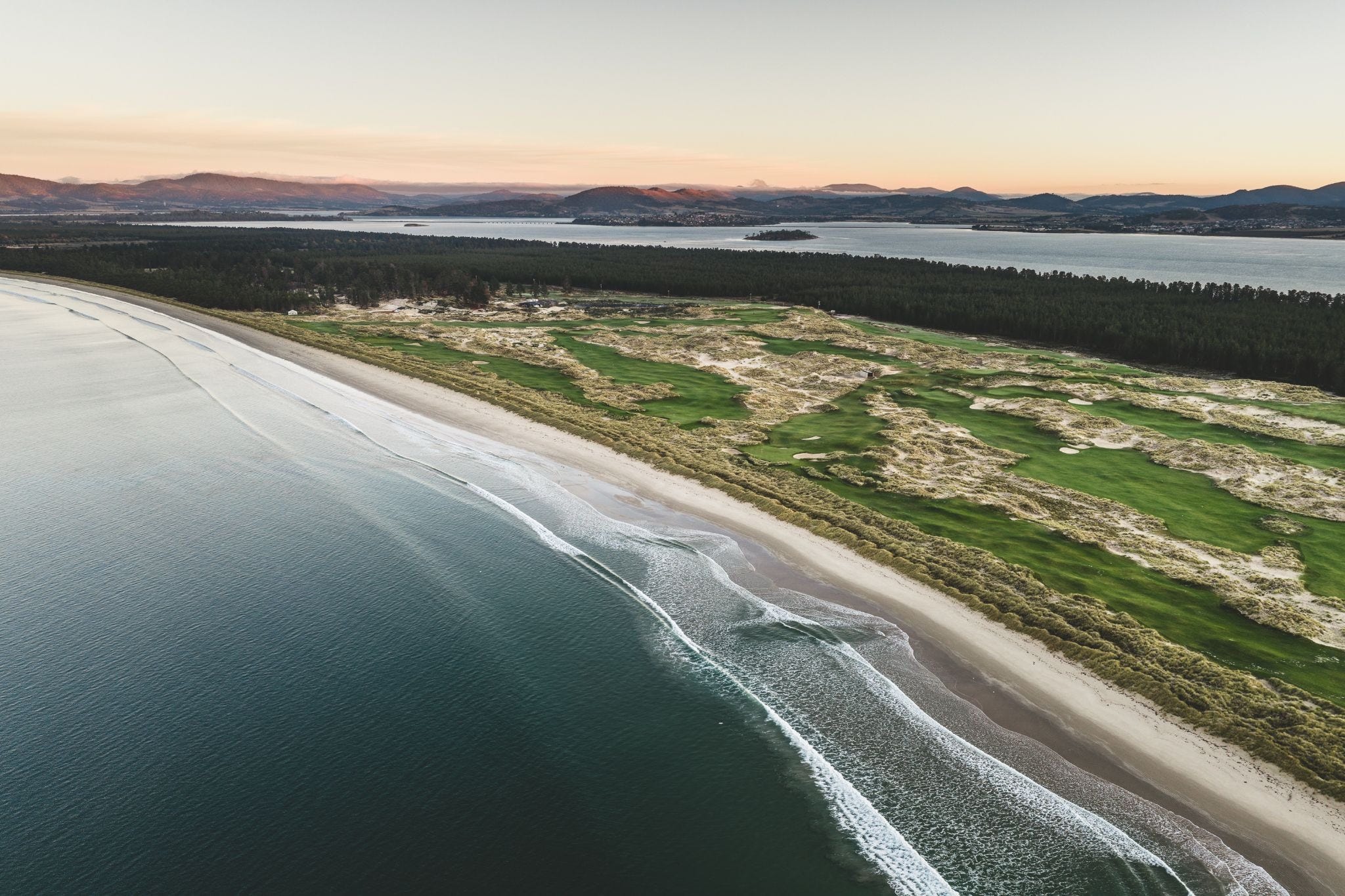
The course opened in December 2025 in Hobart, Tasmania, fifteen years in the making, to wide critical acclaim. It joined a short list of Tasmanian courses now pulling international golfers a long way south, alongside Barnbougle and the King Island pair, Cape Wickham and Ocean Dunes. Founded by Mat Goggin and designed by Clayton, DeVries & Pont, the course is open to the public and aims to rank among the world’s premier destinations. A second eighteen, the North Course, is already planned, which would take the site to thirty-six holes. A membership programme is set to follow.
Tasmania’s pull is what makes the booking matter. Golfers do not fly to the bottom of Australia for a single round. They come for a trip, stringing several courses into one itinerary, planning months out, arriving as complete strangers to the club at the far end. That kind of demand rewards the courses that are easy to get onto and punishes the ones that are not. A destination competes on the strength of its holes and on how quickly an overseas visitor can confirm a time, prove eligibility, and pay before boarding a flight.
A brand-new course feels all of this from the first week. There is no legacy process to lean on and no back office built up over decades, yet the course has to look the part from the first booking. Demand arrives from overseas, in different time zones, from players the club has never met. Get the front end wrong and the first impression of a fifteen-year project is a clumsy email exchange.
In June 2026, 7 Mile Beach chose Currents Golf, the Melbourne technology company, to run its visitor tee sheet from end to end. Golfers confirm their eligibility, request a time, and pay in one place, without leaving the club’s own environment. The club sees every request, every arrival, and every payment in one view.
“The booking process is the first point of contact with many players, so making this as seamless as possible was something Currents brought with their platform. We wanted an online experience that matched the natural experience we provide on site, and Currents made sure this was the case.” Will Kay, General Manager, 7 Mile Beach
Currents did not begin as a general booking tool. It started with a request from The Royal Melbourne Golf Club, which wanted to handle heavy visitor and reciprocal demand without the manual load that came with it. The club needed to move faster inside its own operation while giving visitors an arrival that matched its standing.
The result was Passport (the visitor module built by Currents), software shaped around what private and destination clubs actually require. Before it, visitor bookings ran on long email threads, letters of introduction, handicap certificates, and document checks before a time was confirmed and payment taken. Currents Passport moved that online and cut the steps out. Currents built it alongside club teams and made it configurable to each club’s rules. By the company’s account, it has saved hundreds of staff hours while giving clubs a clear view of visitor demand and firmer control over it.
The harder part sits in the detail. Leading clubs run on etiquette, tradition, and the bespoke arrangements that mass-market platforms tend to strip out for the sake of speed. Currents Passport keeps them in place and does the administrative work beneath. Reciprocal play is the clearest case. Members of one club playing another under a standing agreement is a specific, high-value slice of demand, and most tee-time systems never built for it, because they were built for public play, where the visitor and the member are the same person. For a destination course, the same discipline covers the international visitor who belongs to a club overseas and expects that courtesy to travel with them.
There is a build-or-buy question underneath all of this, and new courses feel it sharply. A destination course can pour capital into design, agronomy, and the clubhouse, then run its bookings on a spreadsheet and a shared inbox. Building software in-house solves that, slowly and at cost. Off-the-shelf booking tools are quick to switch on, but they treat a world-ranked course like a municipal range. Currents Passport sits in between: software already built for this type of club, configured to the course’s own rules.
The mix only gets more complex from here. When the membership programme arrives and the North Course opens, 7 Mile Beach will be balancing members and public visitors across thirty-six holes. Sorting that out on the system the club already runs is easier than retrofitting it once the volume is there.
Keeping the visitor inside the club’s own environment brings a benefit operators tend to undervalue. The club owns the relationship the whole way through, from first enquiry to booking, pre-arrival contact, and the day of play itself. Every point of contact reinforces the entire experience the club has spent years building.
Currents Golf now works with many of the leading clubs across Australia and New Zealand, and will shortly be expanding into the U.K. and Europe. 7 Mile Beach gives it a public destination with global ambition and a second course on the way. For a club setting out to compete with the best in the world, the decision to run its front door on Currents says a great deal about where it thinks the visitor experience starts.
Booking — confirm eligibility, request a tee time, and pay through the club’s own booking page, book.7milegolf.com.au, the visitor system built by Currents.
More info — 7milegolf.com.au.