

Not All Range Tech Is Equal: Why Operators Are Switching Their Tech to Maximise Revenue
A growing list of venues have pulled their ball-tracking systems for something else entirely. I wanted to understand why. The answer has less to do with tracking than with revenue.

I’ve been around range operators long enough to notice when something shifts, and over the past year something has. It began as a handful of conversations and hardened into a pattern I couldn’t ignore: venues that had spent real money on established ball-tracking systems were tearing them out and starting again. Not upgrading what they had. Writing it off. I wanted to know what drives an operator to walk away from an established brand for a market disruptor.
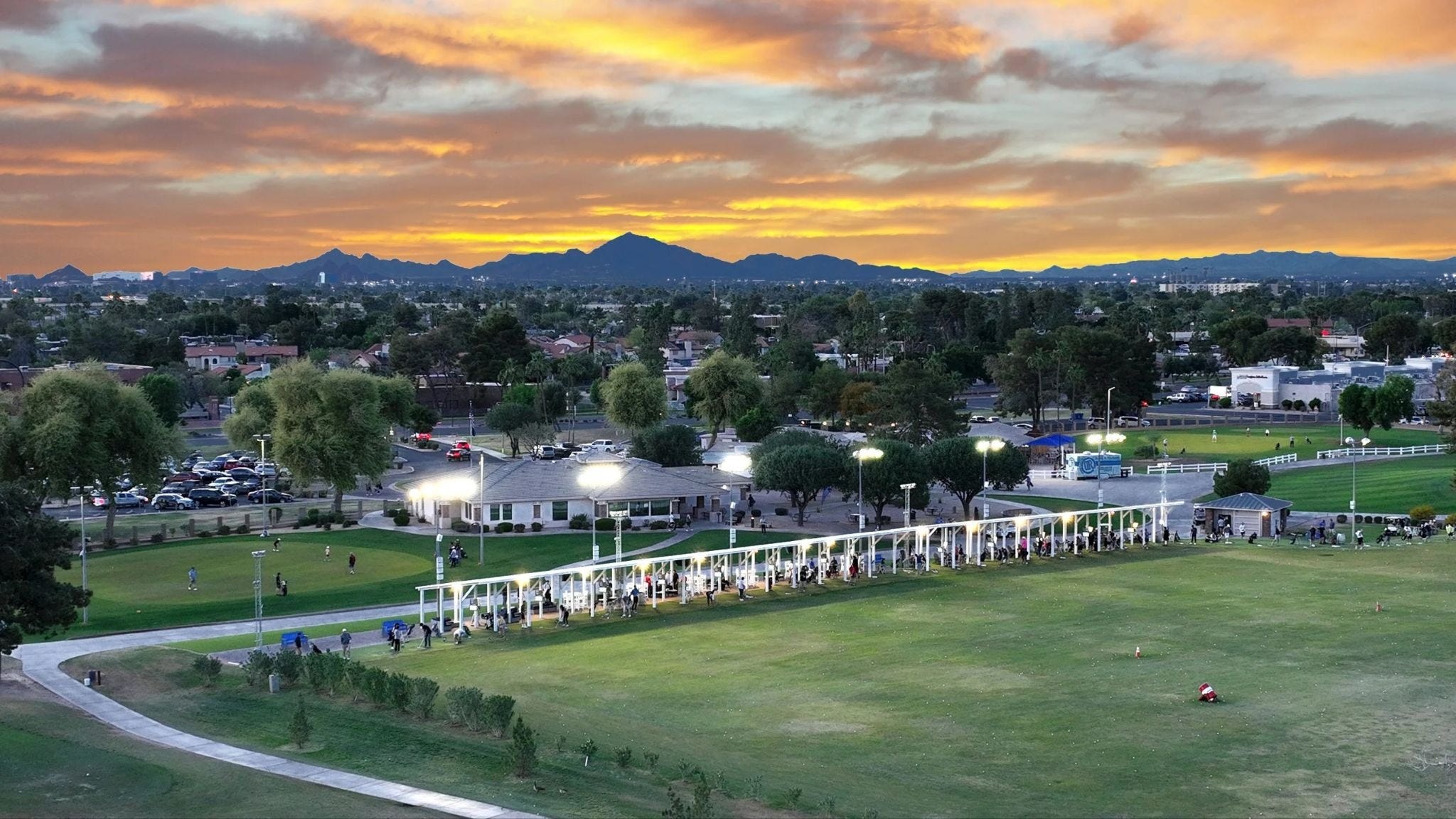
What struck me first was the range of venues doing it. This wasn’t one niche of the market behaving oddly. It ran from high-volume commercial sites — Chelsea Piers, Dobson Ranch, Clermont National — to facilities whose whole standing rests on golf credibility, the kind elite players judge without mercy: Bethpage, Boca West. When venues at both ends of that spectrum start moving the same way, it stops reading as coincidence and starts looking like a trend that needs explaining. And one more thing tied the moves together: in nearly every case, the venues were converging on the same replacement — Inrange.
So I went looking for the explanation. It turns out to have very little to do with how well any of these systems tracks a golf ball.
The ceiling most operators never see
Start with a number almost no operator ever writes down: the revenue ceiling. A range’s revenue is the product of two things — how many people come through the door, and how much each of them spends. Both are capped, long before any pricing or marketing decision, by one design choice that usually gets made without anyone noticing it was a choice at all: who is this facility actually built to serve?
For most ranges, the honest answer is the serious golfer. The technology is chosen for them, usually on a head pro’s recommendation; the experience is shaped around them, and for years that looked like discipline — know your customer, serve them well. The trouble is that the serious golfer is a slice of the people who might be standing in those bays, not the whole room. The newcomer who’s never had a lesson, the four friends out for the evening, the company hosting its team, the family looking for something to do on a Saturday: each one is a visit and a spend that a golfer-only facility is structurally unable to capture. Build only for the loyalist and you don’t get focus. You get a glass ceiling.
It gets worse, because that same choice quietly hands your best customers to someone else. Put a casual group in front of a golfer-only range and they have two options: practise here, or pay a lot more for a night out at Topgolf. Without meaning to, the operator has used their own technology to build that fork in the road, and pushed the most social, highest-spending visitors straight toward a competitor’s door. The golfers will love the setup. But it was never going to make the venue anything more than a range, and the numbers say so.
This is the part legacy practice tech can’t fix, because it isn’t a bug in the software. It’s what the software was built for in the first place. A system designed to measure a swing does that well and has nothing to offer the person who didn’t come to practise. The commercially-minded operators I spoke to had all reached the same conclusion: the old model isn’t underpowered, it’s capped — and they’d stopped being willing to live under the cap.
The case for staying put
Switching is not an obvious call. Ripping out a system that still works is expensive and disruptive: new hardware in every bay, staff to retrain, weeks of transition at a venue that cannot afford to go dark. The incumbents earned their position, too — Trackman and Toptracer set the measurement standard this industry trusts, and plenty of facilities run their kit without complaint. For some, a golfer-only setup remains exactly the right buy. A lesson-led academy, a private club whose range exists to serve its members: if serious golfers are the whole room, there is no ceiling to lift.
The operators who switched don’t dispute any of that. Their answer is narrower, and harder to argue with: their growth depended on customers the old system was never designed to serve. Once they had done that maths, the transition stopped looking like the expensive option. Staying put was.
The migrations — and what they actually prove
What the switchers bought is software designed for the whole room rather than one seat in it — the avid golfer grinding on their Inrange Handicap, the beginner, the social group playing Bay vs. Bay, and the corporate client who never thought of a range as a place to host anything. That breadth rests on three things, and each one maps onto a different line of the operator’s P&L. The tracking is reliable enough for the customer who’ll forgive nothing: the non-golfer, who simply never returns if the system feels broken. The customer-data analytics let a venue actually see its segments and market to them on purpose, instead of hoping the right people wander in. And the API integrations into the systems an operator already runs (POS, booking platforms, ball dispensers) collapse a pile of manual workarounds into a single operation. Put together, that’s the distance between a venue that has screens and one that’s genuinely tech-enabled.
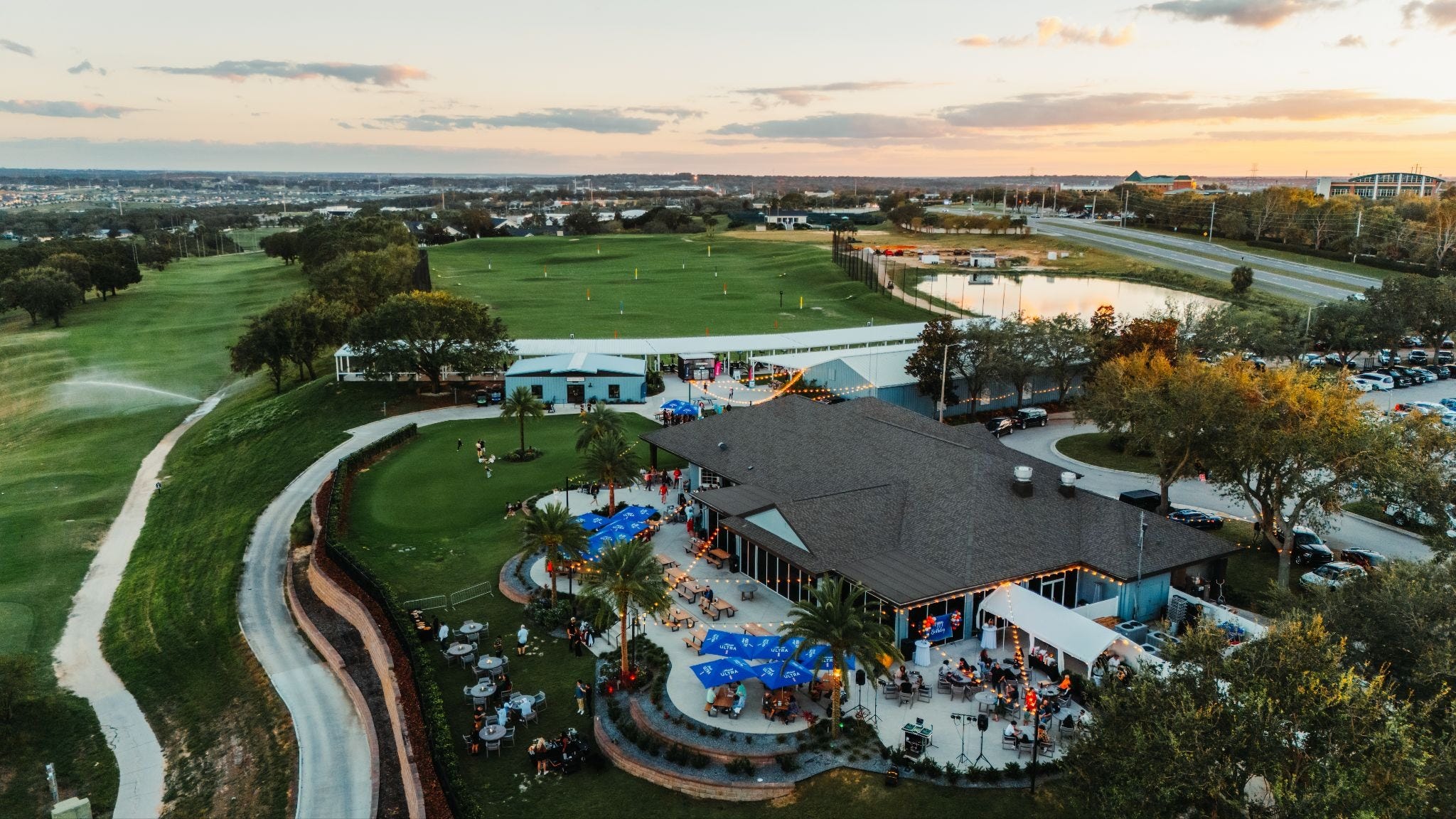
What convinced me it was real wasn’t the spec sheet. It was that the same product has had to clear two very different bars at once. At the high-volume commercial end — Chelsea Piers, Dobson Ranch, Clermont National — it holds up under exactly the social, high-throughput traffic golfer-only systems were never built for. At the premium practice destinations, where the serious player’s verdict is everything — Bethpage, Boca West — it has to satisfy operators who cannot afford to look like they’ve gone soft on golf. Legacy providers have never had to clear both. And the list doesn’t look finished: the talk in operator circles is that more marquee venues are weighing the same move.
One operator put it more plainly than I can.
“Inrange transformed our business model. We’re earning more, attracting new audiences, and hosting events we never could before. And Inrange’s support is night and day compared to Toptracer’s.”
— Joe Dahlstrom, Owner & CEO, Palm Beach National
Read that again. The vocabulary is all business model: new audiences, events he couldn’t host before, and a support comparison he calls night and day.
What comes next
Step back and the market is starting to split into two groups. One is still running setups built for a single kind of customer, performing exactly as designed — like a range, no more. The other has decided its facility should earn from everyone who walks in, and gone looking for the technology to make that true. The first group still thinks the question is whether their tracking works. The second has already moved on to a better one: was any of this ever built for the whole market — golf and entertainment, not just golf — or only for the part we already had?
That’s the shift I set out to understand. Having traced it, the open question isn’t about one disruptor anymore; it’s about everyone else. It will be fascinating to see how established players like Trackman and Toptracer look to evolve along with the macro trend Inrange has created — because the operators voting with their installations have already told us which way the market is heading.