

Go Low or Go Home: A New Margin Line at the Pro-Shop Counter
Play Nine proved a golf card game earns its place at the clubhouse or resort register. Go Low or Go Home wants the shelf space next to it, with a $10 wholesale price and a sharper table game behind th

Play Nine did the hard part first. The golf-themed card game has moved units in the hundreds of thousands across retail and online channels, by the company’s own account of the category, and it did it as a casual, family-friendly product: easy to learn, lots of luck, steady scoring. It proved the category exists. It didn’t have to prove anyone would compete over it.
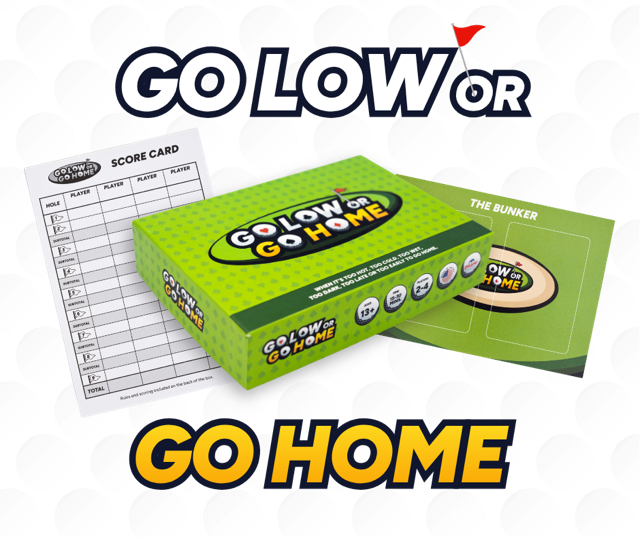
Go Low or Go Home is built for the table Play Nine leaves alone. Where Play Nine plays like a family parlor game, Go Low plays like Texas Hold’em wearing golf spikes: two hidden cards in the bunker, three drawn cards to work with, and momentum that turns on a single draw. No poker experience and no wagering are required to sit down, which keeps the game clubhouse-safe. What changes is the scoring dynamics. Each turn presents four strategic choices: draw from the discard pile, take a fresh card off the deck, play from the hand, or gamble on one of the hidden bunker cards. Every decision balances information against uncertainty, much like club selection on the course.
The two face-down bunker cards are where the game earns its edge. A player can sit on them, discard them, or flip one as a shot, and the rest of the table has to guess which. That single piece of hidden information is what turns a scoring exercise into a read on the people across the felt. Golf’s own logic stays on the scorecard, where the lowest hand wins the hole.
Four formats scale the stakes. Hole-by-hole match play settles a quick head-to-head. Positional match-play scoring ranks a full group, first through fourth. An amateur stroke version plays with handicaps and introduces a Snowman card, a name any golfer who has ever written an eight on a scorecard will recognize. The professional format strips out the mulligans, where a single blow-up hole can wreak havoc on a player. Play Nine asks a player to manage their own hand. Go Low requires you to read the table.
For the buyer, the two products sit at the same price point, which is precisely why the comparison matters. Retail is $19.99, wholesale $10, and the standard opening order is twelve units: $120 of inventory in a hand’s width of counter space. Each unit leaves $9.99 in the shop, a 100% margin, so the counter doubles its money on a box that cost it ten dollars. Six units sold cover the entire order before any of it becomes profit. That is not an argument for replacing Play Nine on the shelf. It’s an argument for a second SKU in a category the counter has already priced, stocked, and sold once.
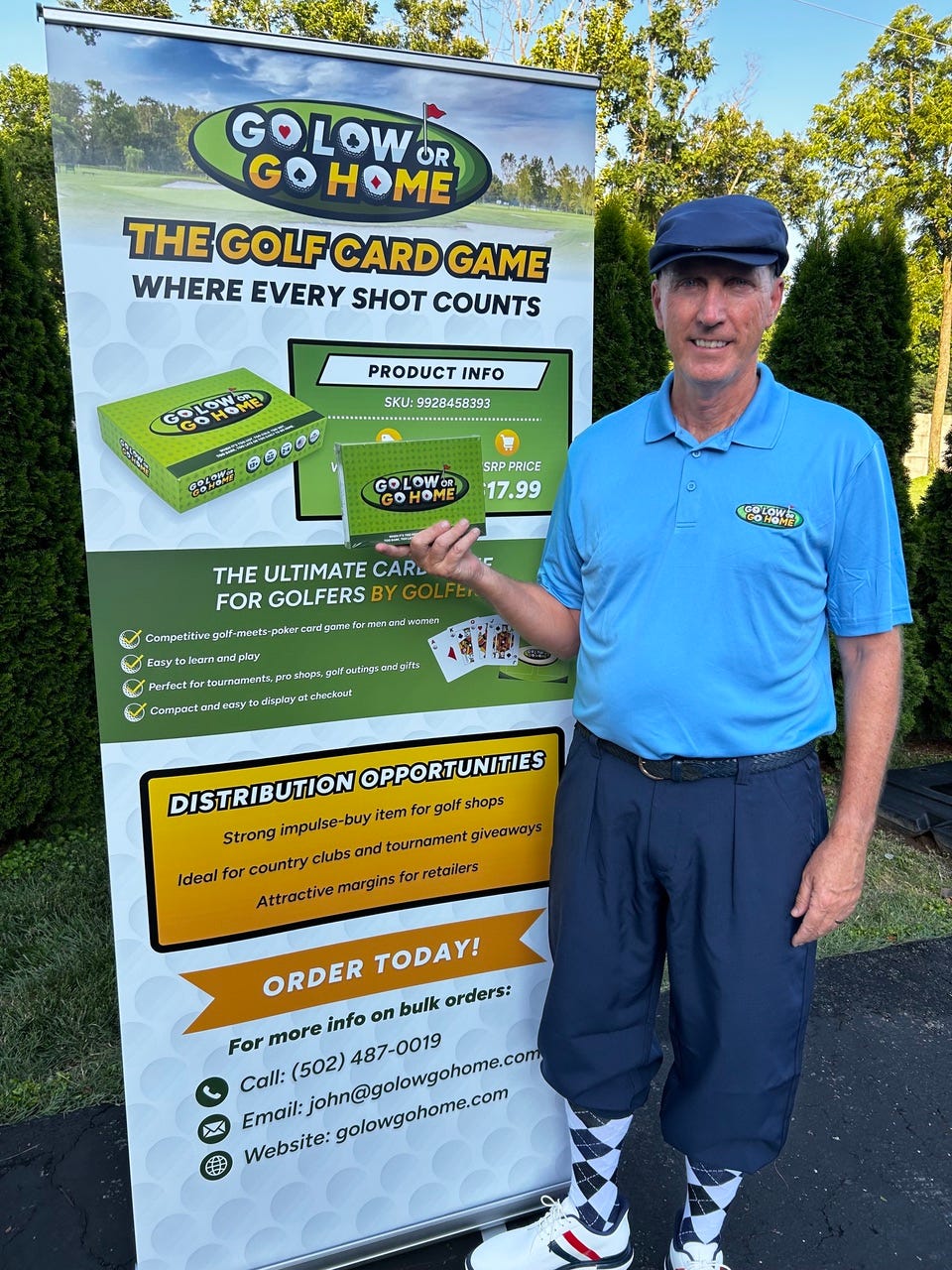
The founder is John Beran, a former CPA with an MBA and a career spent commercializing intellectual property, from animal-health testing to semiconductors. This is the first company where he is the patent filer and trademark holder himself. The idea traces to a card game played on a cruise and to winters in Wisconsin, where the golf season shuts down and rain washes out whole weekends. What he remembers losing on those days isn’t just the round. It’s the table talk: the needle, the press, the foursome’s running arguments.
That is the company’s wider pitch, past the register. It frames the game as revenue for the hours a course currently can’t sell: rainouts, the off-season, the gap before a tee time, the 19th-hole table, the simulator bay between swings. A rained-out morning is time a facility already staffs and cannot bill, and a foursome dealt into a hole is a foursome that stays on-site and orders another round. That puts the box in the simulator lounge and on the F&B floor as readily as in the shop.
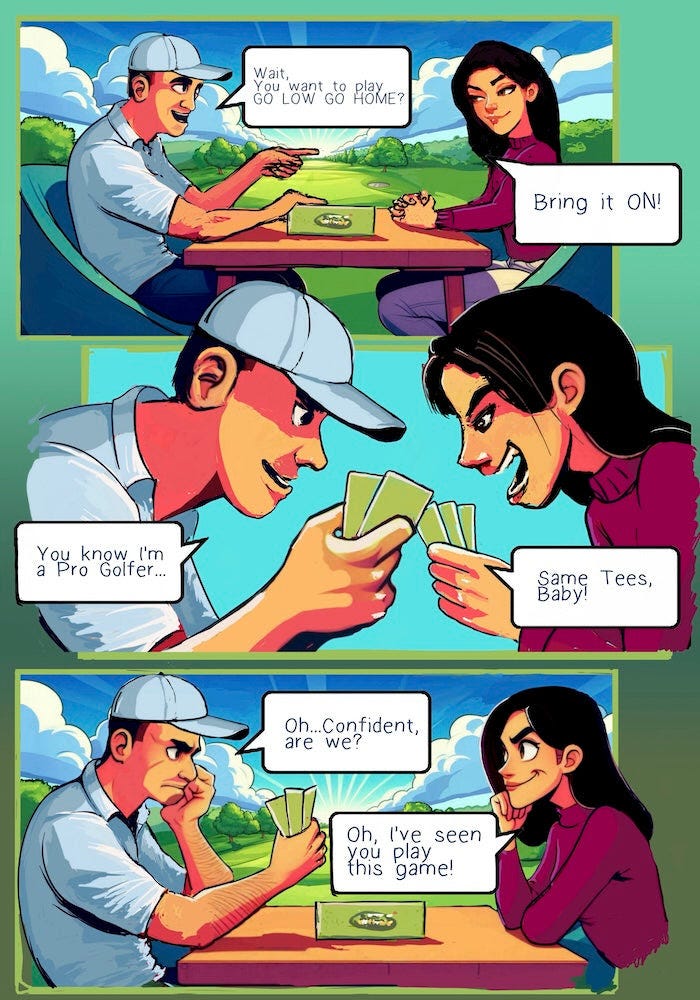
Competition is the engine behind that argument, and the company has an early data point for it. It staged its inaugural men’s tournament at Midland Trail Golf Course in Louisville with a field of sixteen. Fourteen of them bought the game on the spot. An inaugural women’s tournament follows in August, also in Louisville. Beran recruits and trains dealers to introduce the game and run tournaments, signs independent reps to walk it into retail settings, and partners with event managers as fields scale up. An integration with Golf Genius, still ahead, would connect play to the tournament software most courses already run, opening club-versus-club competition and junior-golf fundraisers on infrastructure a facility already trusts. None of that is available to Play Nine’s mostly family-friendly play. It’s the part of the pitch that only makes sense for a game built on reading an opponent.
Behind the box, the wholesale plumbing is installed the way a second entrant into a proven category needs it to be. The game is listed on RangeMe, the sourcing platform retail buyers browse, with dealer and rep agreements in motion. Carton orders ship direct to courses through self-distribution, while Amazon and golowgohome.com carry the consumer side, with Fulfillment by Amazon handling multi-channel orders.
The demand case rests on who does the buying. The National Golf Foundation counts roughly 13 million core golfers, and they account for more than 90 percent of all golf spending. They also spend through the holidays: the NGF puts the average core golfer’s holiday gift spending near $934, close to 50 percent above the typical American shopper. Against a number like that, a $19.99 box is a rounding error in the basket, which is the whole logic of an add-on at the counter. The company sizes its commercial reach at 40,000 accounts, from course shops to resorts to tournament operators, against the NGF’s estimate of roughly 136 million golf-engaged Americans on the consumer side. For scale underneath all of it, more than four billion decks of cards sell in the United States every year, by the company’s count, and a category leader already proved golfers buy them themed to the game they love.
The calendar makes the decision current rather than theoretical. Beran opens holiday pre-orders in the coming weeks, aimed at the gifting quarter, and exhibits at the PGA Buying Summit in Frisco this Sunday through Wednesday, where the season’s wholesale orders get written. Play Nine already earned its spot on the counter. The question this weekend is whether it keeps that spot to itself.