



HOUSEKEEPING BEFORE WE START: Golf Business Review is made possible by the support of its readers and by carefully selected partnerships that sustain our independent editorial work. If you would like to support independent, long-term coverage of the global golf industry — and access the full GBR archive — subscribe here.
HOW TO PARTNER WITH US: If you are interested in contributing to and strengthening our content offering as a partner, company, or institution, we would be pleased to hear from you at newsroom@golfbusinessreview.com.
Hello GBR,
Today’s edition of GBR looks at the many different ways golf is trying to turn attention into revenue. Golf.AI starts with the most basic point of contact, the pro-shop phone, and asks what happens when every call, booking attempt, and missed opportunity becomes visible. Noteefy’s acquisition of Metolius takes that same idea into course data, forecasting, and operator decision-making.
Elsewhere, Versant’s $530 million deal for Full Swing brings simulator technology further into golf’s media and engagement economy, while ClubGrub’s latest report shows how food and beverage expectations are changing on course. We also look at Scotland’s £6.3 million support for the Genesis Scottish Open, which I’m pleased to see since I have a home less than 10 minutes from The Rennaisance Club, and have played the course on a few occassions, PGA Tour ratings ahead of future media talks, and what some of golf’s most famous courses could be worth as land.
Enjoy today’s GBR.
WHAT ACTUALLY HAPPENS IN THE FIRST THIRTY DAYS OF AN AI CONCIERGE?
Most course technology takes months to prove itself, and even then, the proof is buried in a report nobody opens. An AI Concierge is different. The change is visible in days, and it builds week by week. Here is what the first month tends to look like once a course switches on.
Week one: the phone stops running the shop. Every call gets answered, at any hour, including the ones that never needed a person: what time is sunset, is it raining, are the carts out today? The Pro Shop notices the quiet first. Not fewer golfers, fewer interruptions.
Week two: the after-hours bookings appear. Tee times start landing at 10 pm, at 6 am, on a Sunday night, in the windows that used to be dead air because no one was there to pick up. None of this demand is new. It was simply never captured.
Week three: the staff gets their job back. Freed from the switchboard, the team goes back to being hosts: selling in the shop, greeting players, running the floor. The repetitive volume is absorbed, and human attention moves to where it actually matters.
Week four: the course can finally see itself. For the first time, every call and every booking attempt is captured. The missed calls, the abandoned bookings, the after-hours demand, the leaks that were always there but never measurable, all become visible. Thirty days in, the operator isn’t looking at a new tool. They’re looking at their own course clearly for the first time.
What the month is really showing you
The headline is not that a machine answered the phone. It is that a course discovers how much it was losing without ever knowing. The calls that rang out after closing, the golfer who tried twice and gave up, the booking that went to whoever answered first: none of it showed up on any report, because the course was never on the other end to record it. An AI Concierge does not just add capacity. It turns invisible loss into something an operator can see, and once it is visible, it can be captured.
That is the work the AI Concierge is doing in the background from day one: answering every call, handling bookings, managing inquiries, and selling memberships around the clock, in a voice as composed at three in the morning as at three in the afternoon. The first thirty days are not a trial period. They are the moment a course stops guessing at its demand and starts answering it.
GBR readers only: Sign up at GOLF.ai this week for your chance to win a free annual AI Concierge subscription, and let Sir Nick Faldo answer every call from day one, whether it comes from a golfer or a golfer’s AI.
SCOTTISH GOVERNMENT COMMITS £6.3M TO GENESIS SCOTTISH OPEN
The Scottish Government has announced £6.3 million ($8.4 million) of funding over three years to support the continued development of the Genesis Scottish Open at the Renaissance Club in North Berwick through to 2028.
The co-sanctioned event between the PGA Tour and DP World Tour attracted a record crowd of nearly 90,000 last year, while independent analysis estimated the 2024 tournament generated £19.2 million for the economy and supported 234 jobs. Business Minister Richard Lochhead said the investment would help the event “continue to go from strength to strength” while delivering economic and tourism benefits, with Genesis Scottish Open Director Rory Colville saying the support from the Scottish Government and VisitScotland was “incredibly important” in showcasing Scotland as a global sporting destination.
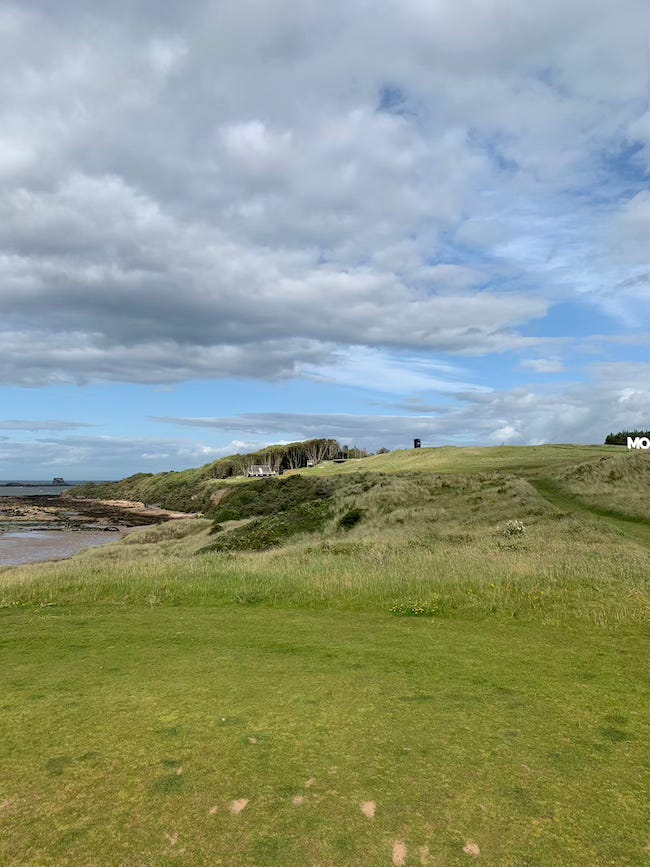
VisitScotland’s Rob Dickson said the tournament plays a key role in growing the visitor economy and raising Scotland’s international profile, while East Lothian Council chief executive Laurence Rockey said the event had delivered a major boost to the region and helped promote East Lothian as Scotland’s Golf Coast.
VERSANT TO BUY TIGER-BACKED FULL SWING IN $530M DEAL
Versant Media Group, owner of Golf Channel, GolfNow, and GolfPass, has agreed to acquire Full Swing for about $530 million in cash, subject to customary adjustments.
The simulator and sports technology company is expected to join Versant’s Digital Platforms and Ventures portfolio after the deal closes in the second half of 2026.
Full Swing, based in Carlsbad, California, is backed by Tiger Woods, who invested in 2015 and remains an ambassador, with other golf ambassadors including Jordan Spieth, Xander Schauffele, Jon Rahm, and Dustin Johnson; the company is also the Official Licensed Simulator of the PGA Tour and an Official Technology Partner of TGL. Versant said the acquisition will add immersive simulation, launch monitors, virtual greens, integrated software, and performance data to its golf business, creating opportunities across content, commerce, training, venues, and fan engagement. “Sports are becoming more interactive, more data-driven and more connected,” said Versant chief executive Mark Lazarus, while Full Swing CEO Ryan Dotters said joining Versant gives the business “the scale and distribution to bring our technology to even more golfers, athletes and fans.”
ATHENS GOLF CENTER ADDS POWER TEE RANGE TECHNOLOGY
Athens Golf Center, Lexington, Kentucky, has completed a technology upgrade with the installation of Power Tee’s automated teeing system, strengthening its practice offer for golfers in the Lexington area.
The installation gives Athens Golf Center a more modern range offer, improving the practice experience for regular players while aligning the facility with technology used at leading golf venues worldwide. “Our goal has always been to create a welcoming golf experience for players of all abilities,” said Toni Schuck, co-owner of Athens Golf Center. “By adding Power Tee, it helps us make practice more fun for golfers. Plus, it helps grow the game.”
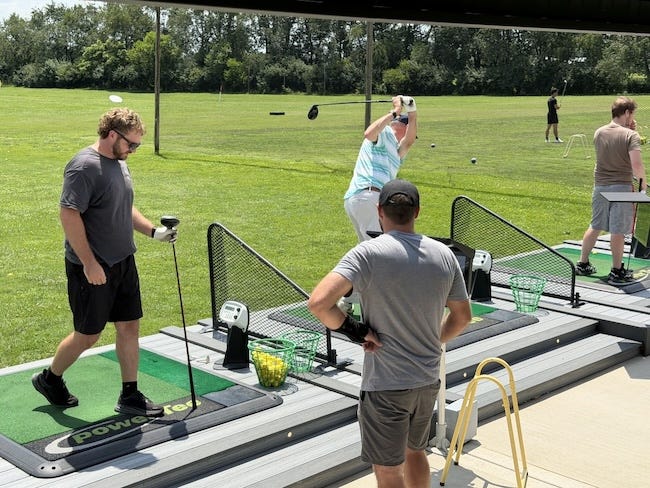
Athens Golf Center said the upgrade reflects its commitment to improving the local practice experience through better technology, service, and facilities.
NOTEEFY ACQUIRES METOLIUS GOLF TO BUILD UNIFIED REVENUE PLATFORM
Noteefy has acquired Metolius Golf, combining its demand and revenue management tools with Metolius’s AI-powered course data intelligence platform to serve roughly 1,500 golf courses.
The deal brings together Noteefy’s products for tee time demand management, booking confirmations, no-show reduction, AI pro shop support, and lead management with Metolius’s daily reporting, revenue forecasting, merchandising insights, and weather-adjusted performance benchmarking. Ross Liggett, founder of Metolius and No. 25 on Golf Inc. Magazine’s 2025 Most Powerful People in Golf list, will join Noteefy as Vice President of Data, with Noteefy CEO and co-founder Jake Gordon saying the acquisition puts the company in a position to help operators turn AI “into real revenue”.
Liggett said the combined platform will help operators consolidate data from across their business, flag anomalies, answer questions in plain English, and recommend revenue, staffing, and marketing actions, giving smaller operators access to decision-support tools previously associated with larger hospitality businesses.
VITBIO LAUNCHES WEARABLE AI BIOMECHANICS SYSTEM FOR GOLFERS
VITBIO has launched OmniGmot AI Golfer, an integrated golf biomechanics system that combines full-body AI motion capture with dynamic plantar pressure analysis through wearable smart insoles and full-body motion sensing.
Developed using VITBIO’s proprietary patented technologies, the system is designed to deliver laboratory-grade biomechanics data outdoors by synchronizing ground reaction force, movement patterns, and swing mechanics through AI algorithms. Spanish professional golfer Juan Salama, a former No. 1-ranked golfer in Spain, will demonstrate the technology at SPORTEC Tokyo, which starts tomorrow and runs to July 10 at Tokyo Big Sight, showing how it can support course-specific swing optimization and quicker adaptation to unfamiliar playing conditions. “OmniGmot AI Golfer gives my coach and me a completely new level of performance insight,” Salama said, with the system also recognized by the Global Sports Innovation Center, powered by Microsoft, and named a winner of the 2025 ISPO Product & Service Award.
CLUBGRUB REPORT SHOWS GOLFERS MOVING BEYOND THE HOT DOG AT THE TURN
ClubGrub’s 2026 Mid-Year Golf Food & Beverage Trends Report, based on tens of thousands of mobile orders placed in the first half of the year, shows golfers shifting away from traditional halfway house staples toward made-to-order food, premium drinks, and on-course delivery.
Hot dogs appeared in only 3.86% of ClubGrub orders, down 14.9% year on year, while flatbreads, sliders, chicken tenders, margaritas, Surfside canned cocktails, fried chicken sandwiches, shrimp tacos, fish tacos, quesadillas, and breakfast burritos were among the faster-growing items. The largest single on-course mobile order reached $357 and included six Transfusions, six lobster rolls, four John Dalys, and two flatbreads, while clubs using ClubGrub recorded an average 15.5-minute improvement in pace of play by reducing time spent waiting at the halfway house.
“Golfers no longer view food and beverage as a quick stop at the turn—they expect it to be part of the overall hospitality experience,” said ClubGrub founder Spencer Potter, whose GPS-powered platform supports mobile ordering and delivery across golf courses, practice facilities, pools, beaches, grab-and-go markets, and residential communities.
WHAT GOLF’S GREATEST COURSES COULD BE WORTH AS LAND?
Golf Digest has examined the hypothetical land value of several leading golf courses, using modeling by strategic asset manager Frazer Rice based on zoning restrictions, comparable sales, and the highest legally permissible use of each property.
Indian Creek Country Club in Florida, a 1929 William Flynn design at the centre of the 294-acre Indian Creek Village near Miami Beach, was estimated at $3bn-$5bn, ahead of Los Angeles Country Club at up to $2.6bn, Pebble Beach Golf Links at $880m, The Olympic Club at $750m, Wynn Golf Club at $520m, Seminole Golf Club at $437m, Maidstone Club and Maroon Creek Club at $300m each, Winged Foot at $252m and Medinah at $130m. Rice said Indian Creek’s “exclusivity and ultra-luxury residential context” gave it the highest per-acre estimate in the analysis, while Dan Spiegel of Coldwell Banker said LACC’s land would be “snatched so darn fast” because of its commercial potential.

The article’s broader conclusion is that elite golf land is valuable not simply because it could be developed, but because surrounding property values often depend on the course remaining untouched, with golf developer Bert Guy saying: “The land is valuable because of the golf, not the other way around.”
TROON USES FAMILY GOLF MONTH TO SUPPORT FIRST TEE
Troon has named July as Troon Family Golf Month, with Family Golf Day taking place on Sunday, July 26, at Troon-managed and affiliated facilities worldwide as courses host family-focused instruction, events, and tournaments for players of all ages and abilities.
The programme will also support First Tee, with Troon and Member For A Day running a July 15-29 charity auction featuring golf rounds and stay-and-play packages at venues including Tubac Golf Resort & Spa, Hammock Beach Golf Resort & Spa, Monster Golf Club and Resorts World Catskills, Bay Creek Golf Club, El Conquistador Tucson, Gamble Sands, Monarch Beach Golf Links, Torreon Golf Club and Cimarron Hills Golf & Country Club. Participating Troon facilities will also promote First Tee through signage, digital campaigns, and donations, while Troon’s year-round family golf offer includes free junior golf after 3 p.m. with a paying adult, complimentary Callaway junior rental clubs at participating locations, and free junior instruction when taking a lesson with a paying adult.
Troon has also partnered again with Next Round, allowing facilities to run used equipment donation drives, with Next Round valuing donated clubs and directing 100% of that value to First Tee.
PGA TOUR SIGNATURE EVENTS SHOW RATINGS GROWTH AHEAD OF MEDIA TALKS
The PGA Tour’s eight signature events averaged 3.44 million final-round viewers this season. The seven comparable events were up 8.8% on 2025, giving the Tour a stronger ratings story as it prepares to move to its new Championship Series and Challenger Series model in 2028.
The strongest audiences came from the RBC Heritage at 4.35 million, the Travelers Championship at 4.2 million, the Truist Championship at 3.382 million, the Memorial Tournament at 3.339 million, the AT&T Pebble Beach Pro-Am and Arnold Palmer Invitational at 3.3 million each, the Genesis Invitational at 3.27 million, and the new Cadillac Championship at 2.151 million.
Front Office Sports noted that direct year-on-year comparison is complicated by Nielsen’s new Big Data + Panel methodology, but the numbers matter because most signature events are expected to become Championship Series tournaments, with $20 million-plus purses, average fields of 120 players, and 36-hole cuts. The ratings picture will also feed into future media-rights talks, with CBS Sports, NBC Sports, Versant, and ESPN currently paying a combined $700 million annually under deals running through 2030, while Amazon Prime Video and Netflix could also explore bids.
RAHM SAYS LIV INVESTMENT QUESTION DEPENDS ON BUSINESS PLAN
Jon Rahm said he would not rule out investing his own money in LIV Golf, but added that any decision would depend on seeing a clear business plan from league leadership.
Speaking ahead of the Genesis Scottish Open at the Renaissance Club, Rahm said he had not been asked to contribute financially and remained focused on playing, with the event marking his return to a PGA Tour co-sanctioned tournament through the DP World Tour. LIV is seeking outside investment after the Saudi Public Investment Fund’s decision to end funding after 2026, with Rahm’s comments following earlier remarks that he was not involved in investor meetings and did not see business pitching as his role. “I don’t think he would ask anybody to buy into anything without giving us a business plan first,” Rahm said previously of LIV chief executive Scott O’Neil, while adding that anything beyond that would be “speculation”.