


HOUSEKEEPING BEFORE WE START: Golf Business Review is made possible by the support of its readers and by carefully selected partnerships that sustain our independent editorial work. If you would like to support independent, long-term coverage of the global golf industry — and access the full GBR archive — subscribe here.
HOW TO PARTNER WITH US: If you are interested in contributing to and strengthening our content offering as a partner, company, or institution, we would be pleased to hear from you at newsroom@golfbusinessreview.com.
Hello GBR,
Today’s edition starts with a simple question: What happens when golfers begin solving their own problems before clubs, venues, and operators do it for them?
From Golf.AI’s look at members building their own AI caddies to Inrange’s role inside Barena’s new premium Bordeaux venue, the same signal keeps appearing: golfers want faster answers, better experiences, and more reasons to come back.
Elsewhere, we also look at Toptracer taking Royal Birkdale global ahead of The Open, the growing visibility problem created by AI search, Carnoustie’s £10.3m investment in its championship ambitions, and why the Tour Championship could become a very different commercial product from 2028.
The common thread is not technology for its own sake. It is whether golf can turn changing expectations into service, spend, and repeat demand.
Enjoy today’s edition of GBR.
WHEN YOUR MEMBERS START BUILDING THEIR OWN AI CADDIES, IS THAT A THREAT — OR A TEE SHEET FULL OF DEMAND?
Somewhere this week, a golfer sat down at his kitchen table and built himself a caddie. Not bought one. Built one. He opened a chatbot, fed it the yardage book for his home course, the local rules, and the way the 7th green runs away from the lake. Within an hour, he had a personal caddie who could talk him around all eighteen holes. It cost him nothing but an evening. And he is not alone. Across the major AI platforms, golfers are quietly building their own caddies, their own club-selection tools, their own hole-by-hole strategy assistants. Building a credible golf agent used to take a software team. Now it takes a single rainy night.
For an operator, the easy reaction is to see members routing around the course and read it as a threat. It is the wrong reading. When your best members build their own tools, they are not walking away. They are telling you the gap between how they live and how your course operates has grown wide enough that they are closing it themselves. They live AI-native: they ask, they don’t dial; they expect an answer at 11 pm; they settle things in a sentence. Then they call your Pro Shop and get a busy signal. The homemade caddie is what that frustration looks like once it finds a tool.
What the kitchen-table caddie can’t do
But here is its ceiling. The personal caddie cannot see your live tee sheet. It cannot confirm a booking. It cannot pick up when forty golfers call on a Saturday morning about tee times and pricing. It cannot serve the other 800 members, only its builder. And it dies the moment that the builder loses interest or switches courses. A personal GPT is a map drawn by one golfer, for one golfer. It is not the territory, and it cannot run a golf course.
This is the distinction most operators miss. Two different things are being built, and they are not the same. One is the personal caddie a golfer makes for himself: strategy, yardages, and a companion for his own round. The other is the operational agent, a course that runs for everyone: the one who answers, books, confirms, and never sleeps. The first is a hobby. The second is infrastructure. And the first is the clearest possible proof that the second is wanted.
Why the DIY wave is good news
Every member who builds a personal agent is quietly recalibrating what they expect from golf itself. Once a golfer has talked to an AI about their game, waiting on hold to reach a Pro Shop starts to feel like sending a fax. That expectation does not stay inside their chatbot. It arrives at your first tee, your booking page, your phone line. The DIY wave is manufacturing demand for AI-native golf, and it will be captured by whoever can deliver it across the whole operation, not one player.
That is where the two part company for good. A course-grade agent holds the tee sheet, takes the booking, answers every call, and treats all 800 members the way the homemade version treats its one. GOLF.AI argues this is the natural endpoint of the shift — not golfers replacing the course’s systems, but courses finally meeting the expectation those golfers now carry onto the property.
Your members have already told you what they want. They built it themselves to prove it. The only question left is whether your course hands them the real thing — or leaves them on hold.
GBR readers only: Sign up at GOLF.ai this week for your chance to win a free annual AI Concierge subscription, and give your members the one caddie they can’t build at home: the one that answers.
INRANGE LANDS IN FRANCE INSIDE BARENA, BORDEAUX’S NEW PREMIUM GOLF DESTINATION — AND THE REVENUE MODEL BEHIND IT

Inrange arrives in France this week as the platform behind Barena, a new premium golf destination opening in Bordeaux on 30 June. A 1,600m² building across two levels, with a restaurant, a panoramic rooftop, and 44 bays, designed by a Paris architecture studio and run by a chef whose CV passes through Yannick Alléno’s Dior restaurants and One&Only Dubai. The brief, from co-owner Antoine Olive, was a single image: a bay that could pass for a terrace in Milan, a rooftop in New York, or a beach club in Ibiza. For operators, the spend isn’t the point. The bet underneath it is, and the platform Barena chose to carry that bet is the part worth your attention.
The standard entertainment model runs on footfall and turnover — fill the bays, move the crowd, repeat. Barena is wagering the opposite: that a venue genuinely worth returning to earns more from each guest, across more visits, than one that exhausts its novelty in a single night. Every decision follows that logic, including the technology. Evaluating the market, Barena passed over Toptracer as dated and judged Trackman too narrowly built for professional performance alone, settling on Inrange for being strong at both ends of the room at once — serious shot tracking and data for the players who want it, and a social experience that keeps mixed groups coming back. Skill-rebalancing lets a first-timer and a low handicapper compete in the same game, so the table stays together and the evening holds; bay-vs-bay booking lets the operator hand a whole facility to a single corporate group. None of that is novelty. It’s repeat revenue, designed in.
Here’s the line operators should sit with. Novelty fades on a fixed schedule; returnability compounds. The venues that win the next decade won’t be the ones with the loudest opening night — they’ll be the ones a guest chooses again in six weeks, and brings four people to in three months. Barena built its entire model on that conviction, down to the platform it installed: Inrange. So before the next fit-out decision, the question that outranks the spec sheet is the one this venue already answered: are you building footfall, or a reason to come back? The operators who can’t tell the difference will keep paying to refill the same bays. The ones who can will own the evening.
For more information on Inrange® Golf, visit their website and follow them on LinkedIn for the latest news and product innovations from their team.
NEXT ROUND NAMED FIRST TEE’S NATIONAL TRADE-IN PARTNER
Next Round, the trade-in platform serving golf retailers, fitters, and private clubs, has been named First Tee’s national trade-in partner, turning a relationship built over several years into a nationwide fundraising program for local chapters.
The new program, now live through First Tee’s website, allows golfers to trade in old clubs and equipment online, with 100 percent of the trade-in value going directly to the selected First Tee chapter and no service or processing fees deducted. Next Round will also donate an additional 50 cents to First Tee for every dollar generated through the initiative, up to $50,000 a year, while chapters can either collect clubs locally and ship them using prepaid labels or allow individual supporters to complete the mail-in process themselves.
“This partnership changes that,” said Steve Stoloff, Founder and President of Next Round. “It gives golfers an easy way to clear out old equipment while creating real impact in their own communities,” while Brent Schneider, CEO of First Tee – Greater Richmond, said the platform helps keep quality equipment in use while converting “the generosity of the wider golfing community into life-changing opportunities for our youth.”
TOPTRACER ADDS ROYAL BIRKDALE AHEAD OF THE 154TH OPEN
With the final major of this year just over two weeks away, Toptracer has announced the addition of Royal Birkdale, host venue of The 154th Open, to its virtual golf platform.
Royal Birkdale’s roster of winners includes the likes of Arnold Palmer, Lee Trevino, Tom Watson, and Jordan Spieth, who won in 2017 when the course last hosted The Open, and will allow players at Toptracer-powered facilities worldwide to experience one of championship golf’s most recognized venues from their local driving range.
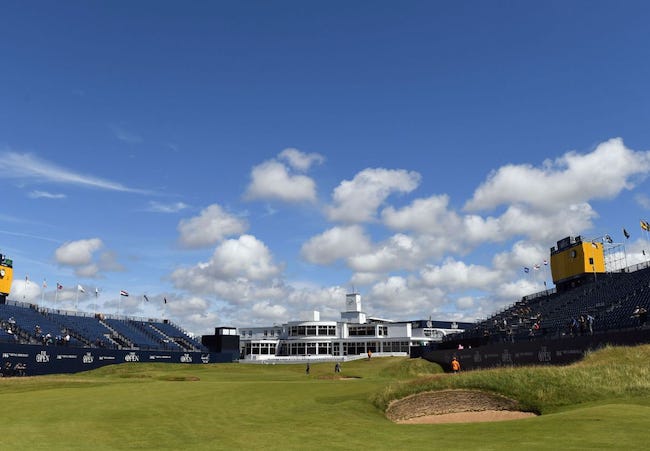
To mark the launch, Toptracer is partnering with The R&A to stage The 154th Open Global Challenge from July 13-19, with golfers competing in a closest-to-the-pin contest on Royal Birkdale’s new par-3 15th hole, a 241-yard test expected to play a key role during championship week. Every shot hit through Toptracer during the challenge will count towards a global leaderboard, with prizes from The Open and a grand prize of two Sunday tickets to The 155th Open at St Andrews in 2027, plus the chance to play the Old Course the following day.
“Royal Birkdale is one of the most recognisable and respected courses in the world and we’re thrilled to give golfers the opportunity to experience it through Toptracer,” said Scott Blevins, President and GM of Toptracer, adding that the global competition gives players “across the world” the chance to compete on the same hole that will challenge the best golfers on the planet.
GOLF SIMULATORS MARKET FORECAST TO REACH US$4.3BN BY 2033
The global golf simulators market is forecast to grow from US$1.6 billion in 2024 to US$4.3 billion by 2033. The headline figures form part of a report by Verified Market Reports, with the report also citing an 11.8 percent CAGR for 2026-2033 as indoor golf expands across commercial entertainment venues, premium residential installations, and sports training academies.
Growth is being driven by higher investment in indoor sports infrastructure, urban leisure spending, simulator lounges, franchised indoor golf centers, luxury home installations, and software-based revenue models built around subscriptions, coaching modules, AI swing analytics, and virtual tournaments. North America remains the leading revenue market, supported by golf participation, disposable income, and entertainment infrastructure, while Asia-Pacific, led by South Korea, Japan, and China, is described as the fastest-expanding region, with Europe also growing as indoor sports venues gain traction in urban markets.
The report says institutional investors are increasingly treating golf simulators as a hybrid of sports technology, gaming infrastructure, and experiential retail, although it also notes potential risks from semiconductor, display, and precision optics supply chains, currency volatility, and pressure on discretionary spending in luxury recreation.
AI SEARCH RESULTS CREATE NEW VISIBILITY PROBLEM FOR GOLF CLUBS
Golf clubs may be increasingly exposed to how AI assistants describe and recommend venues, after a new study by AI Score found that course recommendations can vary sharply depending on whether a golfer uses Perplexity or ChatGPT.
The company tested four UK multi-site operators, The Club Company, Crown Golf, Mytime Active and Get Golfing, using buyer-style prompts including “best golf club near Sevenoaks” and “best golf club in Cornwall,” with results showing that St Mellion Estate did not appear on Perplexity for the Cornwall search but ranked fourth on ChatGPT, while Redlibbets Golf Club was absent on Perplexity but ranked fifth on ChatGPT with a positive description.
Orpington Golf Center was the weakest performer, appearing only as an afterthought on Perplexity and not appearing on ChatGPT, while Nizels Golf & Country Club appeared on both platforms but ranked last each time behind other nearby clubs. AI Score said the findings show that clubs can perform well on Google but still be missing or misrepresented when prospects use AI assistants, with founder David Mullins warning: “Most clubs are testing nothing and assuming AI treats them the way Google does. It doesn’t.”
The full story by Alistair Dunsmuir appears in The Golf Business and can be viewed here.
CARNOUSTIE INVESTS £10.3M IN OPEN RETURN AMBITION
Carnoustie Golf Links is delivering a major investment program aimed at strengthening its position as a leading global golf destination and supporting its ambition to bring The Open Championship back to the venue, which has hosted the championship eight times, most recently in 2018.
Since its acquisition by international investor consortium MIJH Ltd in 2023, £10.3 million has been spent on acquisitions and infrastructure improvements across hospitality, heritage preservation, hotel redevelopment and course quality, including the £500,000 purchase and reopening of local venue Maxi’s, formerly Maxibells, and the takeover of Simpsons Golf Shop, the world’s second-oldest golf shop, with plans submitted to turn the Grade C listed building into a heritage centre by late 2026 or early 2027.
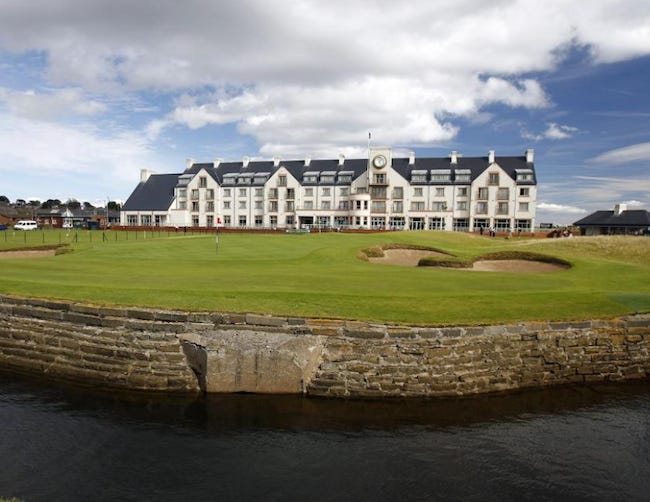
Carnoustie has also invested £2.2 million in John Deere greenkeeping equipment, completed irrigation improvements across all three courses, and strengthened hospitality staffing, including a new Head of Food and Beverage, while assessing plans to upgrade and extend its existing hotel rather than pursue a new-build development. Ross Blackadder, CGL’s Chief Operating Officer, said Maxi’s was “a local institution” that the group wanted to support and revive, while Links Superintendent Kevin Stott said investment in new machinery and irrigation was central to maintaining “championship quality conditions” and supporting future championships.
More on the plans for Carnoustie can be found in John Turnbull’s story in Bunkered.
GOLF CHANNEL TO AIR INAUGURAL LIBERTY CUP ON JULY 4
Golf Channel will broadcast the inaugural Liberty Cup from Liberty National Golf Club on July 4, with the two-hour special airing from 3-5 p.m. ET as part of celebrations around America’s 250th anniversary.
Created through a partnership between Liberty National Golf Club and the Veteran Golfers Association, the match-play event will feature five service branch teams made up of top VGA players representing the U.S. Army, Marine Corps, Navy, Air Force, and Coast Guard, with coverage and storytelling from Brandel Chamblee, Damon Hack, and Jimmy Roberts. The event will also include military tributes, fireworks against the Manhattan skyline and Statue of Liberty backdrop, and appearances from sports figures including Urban Meyer, John Smoltz, Gary Sheffield, Josh Donaldson, Ron Harper, and John Starks. VGA President and CEO Josh Peyton said the Liberty Cup is “more than a golf tournament” and reflects how golf creates “connection, purpose and belonging” for Veterans, while the VGA now serves more than 46,000 Veterans and family members through more than 2,500 local tournaments each year.
QUEENSLAND CLUBS RECEIVE CYCLONE RECOVERY FUNDING
More than $800,000 (AUD) in government funding is supporting recovery and resilience work at two Queensland sports clubs following cyclone-related damage, through the Sport and Recreation Recovery Grant program under Disaster Recovery Funding Arrangements jointly funded by the Australian and Queensland governments.
Redcliffe Golf Club in south-east Queensland has received more than $306,000 to upgrade cart paths after ex-Tropical Cyclone Alfred caused extensive flooding and course damage in March 2025, with the all-weather paths intended to improve access, help members and visitors return to play sooner after heavy rain, and reduce future weather-related damage. “These upgrades will make a significant difference to the long-term viability of our club,” said Redcliffe Golf Club general manager Damon Lonnie, who thanked both governments for the grant outcome. Stratford Bowls Club in Cairns has also received just over $500,000 for recovery works following Tropical Cyclone Jasper and flooding in December 2023, including clean-up, roof repairs, electrical upgrades, ceiling modifications, kitchen, amenities, and dining refurbishment, plumbing improvements, and new sewer connections to replace damaged septic systems. Aimee Chanthadavong’s story for Club Management Australia can be read here.
PGA TOUR CHAMPIONSHIP COULD BECOME HIGH-END VIP PRODUCT
The season-ending Tour Championship hasn’t been the most electrifying of tournaments in recent years. Different formats have been tried, but the end product has struggled.
After last week’s announcement from the PGA Tour’s CEO, Brian Rolapp, a reworked Tour Championship could become one of golf’s most valuable premium hospitality products when the new two-series structure begins in 2028, with Rolapp confirming that the season finale will introduce match play and rotate among prestigious venues, including courses the Tour has not previously visited.
While no future sites have been named, some highly ranked private clubs such as Pine Valley, Cypress Point, and Seminole, as well as destination venues such as Bandon Dunes, are already being discussed by fans as possible fits, even though their limited infrastructure may require a smaller, more exclusive on-site model closer to the Walker Cup than a standard PGA Tour event. PGA Tour chief commercial officer Dhruv Prasad said the Tour was excited by both the drama of match play and “the opportunity to get onto courses that fans may not have seen on the PGA Tour in the past,” adding that conversations with potential venues and commercial partners had been positive.
Prasad said a different on-site format “might make more sense” for these courses, while partner enthusiasm was described as “off the charts,” raising the prospect of higher-value tickets, corporate hospitality, and stronger TV interest around a championship that has been played at East Lake since 2004 and last year produced a $10 million winner’s prize from a $40 million purse.
ADDITIONAL READING: For a refresher on what the 2028 season will look like, the PGA Tour provides a full breakdown of the schedule and the new format, which you can find here.