

GBR Friday | The Business Behind The Open's £300 Million Impact
ZEN Golf's latest step at Celtic Manor before turning to Topgolf Media Networks, the PGA Tour's new sponsorship landscape, indoor golf's continued expansion and The Open's wider economic story.

HOUSEKEEPING BEFORE WE START: Golf Business Review is made possible by the support of its readers and by carefully selected partnerships that sustain our independent editorial work. If you would like to support independent, long-term coverage of the global golf industry — and access the full GBR archive — subscribe here.
HOW TO PARTNER WITH US: If you are interested in contributing to and strengthening our content offering as a partner, company, or institution, we would be pleased to hear from you at newsroom@golfbusinessreview.com.
Hello GBR,
Today's edition reflects an industry investing in its future from multiple angles. ZEN Golf's latest installation at Celtic Manor shows how technology is expanding beyond performance into participation and wellbeing, while Topgolf is turning its audience into a media business, Five Iron continues its international growth, and the PGA Tour is already winning sponsor backing for its new competition model. We also take a closer look at the business of The Open, examining what the Championship's headline economic impact figures really tell us, and, perhaps more importantly, what they don't.
Enjoy your weekend.
CELTIC MANOR ADDS ZEN GREEN STAGE THROUGH WOMEN’S GOLF LEGACY FUND
Celtic Manor Resort has acquired a ZEN Golf Green Stage through the Women’s Golf Legacy Fund, with the project supported by Welsh Government funding delivered through Sport Wales and linked to Wales Golf’s wider strategy for participation, performance, and inclusion.
ZEN Golf will support Celtic Manor and Wales Golf in using the active-terrain putting platform for player performance, women’s and junior pathways, disability golf, beginner activity, and future wellbeing-led initiatives, with the Green Stage recreating real-course slopes and contours indoors and future ZEN Eye putting analysis, augmented reality, and famous-putt experiences, including Graeme McDowell’s decisive putt on the 16th at the 2010 Ryder Cup.
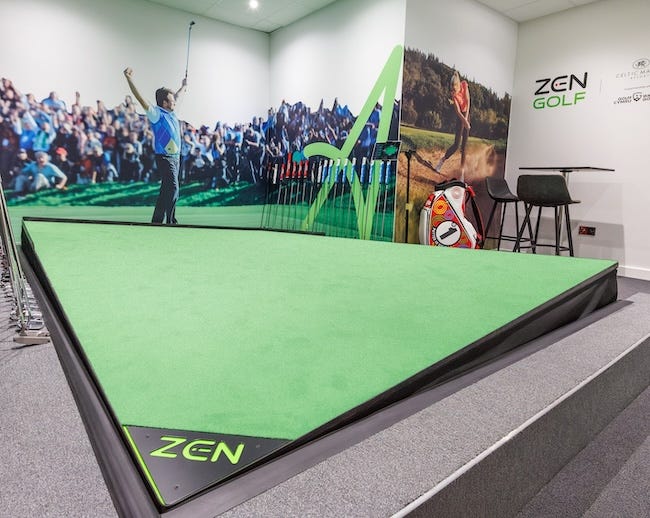
“We believe this is a world first, and the beginning of a new model for golf,” said ZEN Golf founder Nick Middleton, describing technology as “shared infrastructure” that can support participation, player development, wellbeing, and healthier communities. Brian Duncan, Head of Golf, Spa and Leisure at Celtic Manor Resort, called the installation “a significant investment in the future growth, accessibility and inclusivity of golf,” while Gareth Jenkins, Pathway and High Performance Director at Wales Golf, said year-round access to quality indoor putting technology would help squad players “refine our techniques across a variety of breaks” and also support beginner sessions.
59CLUB LAUNCHES USA EDUCATION AND NETWORKING ROADSHOW
59club has launched a USA Education & Networking Roadshow for club managers, golf professionals, and hospitality leaders, with the first complimentary event taking place at TPC Sawgrass on Tuesday, August 11, 2026.
The series is open to golf and hospitality professionals, whether or not their club works with 59club, and will focus on customer service, operational excellence, commercial performance, and practical benchmarking insights drawn from 59club’s mystery shopping program across golf operations, food and beverage, retail, and wider club operations. The opening session, Customer Service & Operational Excellence, will use real-world examples, service frameworks, and industry data to examine what separates good clubs from great ones, supported by 59club partners and guest speakers from across the golf industry.
“These events aren’t sales presentations, they’re about sharing best practices, global insight, and creating meaningful conversations that help raise service standards,” said 59club co-founder Mark Reed, with attendance at TPC Sawgrass complimentary for up to two delegates per club, additional places available at $50 per person, and further USA venues and dates to be announced.
SHOT SCOPE SURVEY SHOWS GOLFERS COMBINING GPS AND LASER DATA
Shot Scope survey data shows golfers are increasingly using both GPS devices and laser rangefinders to support course management, confidence, and scoring, with 80% of respondents using GPS, 51% using a laser rangefinder, 41% using both, and 88% checking a device on every hole.
The findings suggest players value the different roles of each technology, with GPS devices such as the Shot Scope V5 watch providing fairway views, hazard distances, and front, middle, and back green yardages, while rangefinders give precise distances to visual targets such as the pin. Respondents also use the Shot Scope mobile app to review shot performance and on-course statistics, with the survey showing technology adoption is not limited to younger or low-handicap golfers: 64% of respondents were aged 55 or older, and 50% were mid-handicap players between 10 and 19. Accuracy was the main priority for 88% of golfers and ease of use for 84%, while lower- and mid-handicap players were more likely to prefer a multi-device setup and higher-handicap golfers tended to favor the simplicity of GPS alone.
FIVE IRON GOLF TO OPEN ABU DHABI VENUE AT YAS BAY WATERFRONT
The site will span nearly 30,000 square feet and include 12 Trackman-powered simulators, multiple bars, and private event spaces. It will also feature a 12,000-square-foot waterfront terrace with lawn games and a terrace bar. The venue will offer lessons, leagues, practice, dining, corporate events, celebrations, and live entertainment, with founding memberships currently on sale in limited numbers.
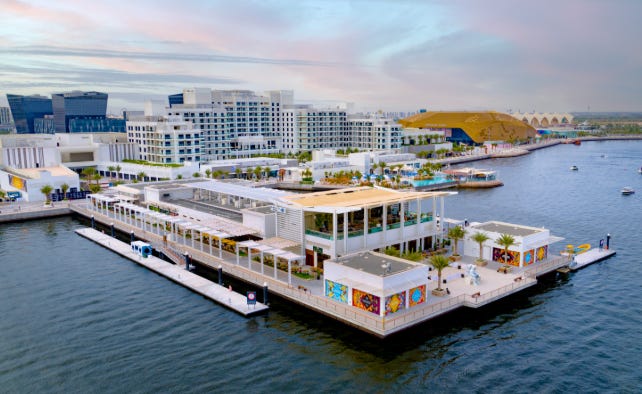
Located near Yas Marina Circuit, Etihad Arena, Ferrari World Abu Dhabi, Yas Links Golf Course, and future attractions including Disney and Sphere projects, the opening adds to Five Iron’s growing presence across North America, the Middle East, Europe, and beyond. “Five Iron has always been about making golf more accessible while creating places people want to spend time,” said co-founder and CEO Jared Solomon, while Five Iron Golf UAE partner Matt Csillag said the Yas Island opening was “an important milestone” in the company’s plans to reshape golf and social entertainment across the Middle East.
TOPGOLF LAUNCHES MEDIA NETWORKS DIVISION FOR BRAND PARTNERS
Topgolf has launched Topgolf Media Networks, a new sponsorship, media, and licensing division. The business gives brands a single entry point to reach more than 42 million annual Topgolf guests through in-venue experiences, more than 28,000 digital screens, first-party audience data, owned digital channels, original content, branded entertainment, and licensing opportunities.
The platform spans more than 100 venues, including a presence across 24 of the top 25 U.S. media markets, and is designed to connect physical visits with digital engagement before, during, and after each experience. “Topgolf has become much more than a place to play golf,” said CEO David McKillips, adding that the new division allows brands to build measurable partnerships around real consumer engagement, with the company pointing to average visits of nearly two hours as a key advantage over more passive sports sponsorship models.
NGF DATA SHOWS GOLF GROWING AT BOTH ENDS OF THE AGE SPECTRUM
NGF research shows golf’s growth is being driven by both younger players and Baby Boomers. While the number of on-course golfers under 35 is up 20% compared with 2019, the 65-plus cohort is also expanding as around 10,000 Baby Boomers reach 65 each day, a trend that began 16 years ago and is expected to continue through 2029. The number of Americans aged 65 and over rose from 49.2 million in 2016 to 64.6 million in 2025, a 31% increase, while the number of on-course golfers in that age group has nearly doubled over the same period. Despite that “Boomer influx”, the overall share of 65-plus golfers has remained relatively stable because younger participation has grown in parallel, with the average age of on-course golfers edging down from 44.6 in 2019 to 44.1 in 2025, suggesting the industry is widening at both ends rather than facing an abrupt “Boomer cliff”.
TAYLORMADE OPENS FIRST KINGDOM FITTING VENUE OUTSIDE THE US
TaylorMade Golf and The Grove have officially opened The Kingdom at The Grove in Hertfordshire.
The 8.5-acre performance and custom-fitting facility, open to the public since May 15, 2026, was formally launched on July 2 with Team TaylorMade athletes Tommy Fleetwood and Charley Hull taking part in a Q&A and range demonstration. Located an hour northwest of London, the venue includes three fitting bays, TrackMan 4, Foresight GC Quad Max, GEARS motion capture, Quintic putting analysis, a 7.4-acre 320-yard grass range, an 850-square-meter teeing area, a 4,000-square-meter short-game complex, more than 1,800 fitting shafts, and 56 Kingdom-exclusive shaft options.
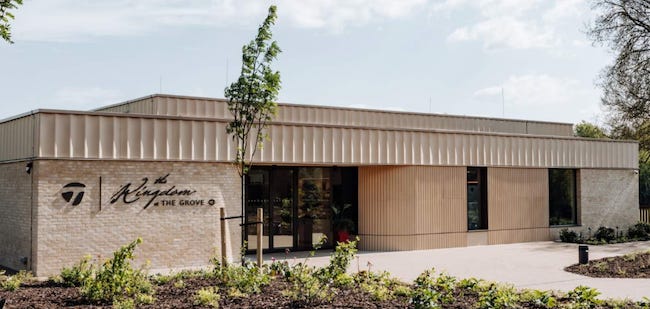
Joel Westwell, Director of Golf at The Grove, said the facility strengthens the resort’s UK golf destination status, while David Silvers, Vice President and Managing Director EMEAP at TaylorMade Golf EMEA, said the first Kingdom venue outside the United States was “a major step” in giving more golfers access to tour-level fitting insight, precision, and care.
TEEGO SECURES SEVEN-FIGURE BACKING FOR UK INDOOR GOLF EXPANSION
TeeGo has secured a seven-figure investment from Middleton Enterprises. The funding will support the indoor golf simulator operator’s plan to grow from six London sites to 20 UK venues within two years, with target cities including Birmingham, Manchester, and Nottingham. TeeGo currently operates in Putney, Hampstead, Angel, Balham, Battersea, and Hackney Wick, and recorded 6,000 indoor rounds over the past year, up 155%, as demand for urban simulator golf continues to grow. “In a year’s time, we predict that more people will be playing golf indoors than on a traditional course outside,” said TeeGo CEO Jay Patel, citing cost, time, and course availability, while adding that TeeGo players can choose from more than 400 virtual courses and complete 18 holes in 30 minutes.
PGA TOUR SPONSORS RESPOND TO 2028 TWO-SERIES MODEL
The PGA Tour is seeing early sponsor support for its 2028 competition overhaul. Chief commercial officer Dhruv Prasad said the new structure gives partners more consistency after an old model in which “some dates were meaningfully better than others”, creating uncertainty over the value of tournament investments.
The new 15-event Championship Series will feature 120-130 top players and 72-hole cuts, with 10 tournaments already confirmed and two more sponsor confirmations understood to be close, while likely candidates include several current Signature events such as Pebble Beach, Genesis, Arnold Palmer, RBC Heritage, Truist, Memorial and Travelers, alongside potential additions in markets including New York, San Francisco, Seattle, Denver and possibly New Jersey. The 20-event Challenger Series will have roughly 144-player fields, with 13 events running opposite Championship Series weeks and promotion available through performance, including immediate elevation for two wins; Prasad said the format would create “stories of competitive consequence”, while adding that existing sponsor contracts will be handled individually as the Tour moves toward roughly 47 events across the Championship, Challenger, and fall Last Chance series. Josh Carpenter, Sports Business Journal.
WHO REALLY WINS THE OPEN?
The economic impact of golf’s oldest championship is routinely measured in hundreds of millions of pounds. The more difficult question is what those figures actually represent—and whether they tell us enough about the lasting value of hosting one of the world’s biggest sporting events.
Every July, once the Claret Jug has been presented and the galleries have dispersed, another figure begins to dominate the conversation surrounding The Open. This year, Liverpool City Region expects the Championship at Royal Birkdale to generate around £200 million ($269 million) in economic benefit. Royal Portrush reported more than £280 million ($377 million) following the 2025 Championship. Royal Troon generated £303.3 million ($408 million), while St Andrews exceeded £300 million ($404 million) when it hosted the 150th Open. Read in isolation, those numbers present a compelling story. Hosting The Open appears to deliver an economic return measured not in tens of millions, but in hundreds.
Yet the consistency of those headline figures invites a different question. What exactly do they measure?
Economic-impact studies have become an increasingly important part of the business case for staging major sporting events. Governments, tourism agencies, and host destinations rely on them to justify investment, demonstrate value, and showcase the commercial significance of global events. In golf, few tournaments carry greater prestige—or greater economic expectations—than The Open. The Championship is promoted not simply as four days of elite competition, but as a catalyst for tourism, inward investment, and international profile. Those ambitions are entirely understandable. The difficulty lies in understanding where measurable economic activity ends, and broader estimates of future value begin.
